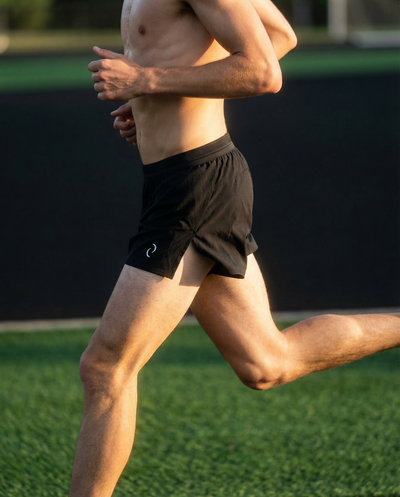

Run culture is the shared life that grows up around running: the teams and run clubs, the race-day rituals, the language, and the identity runners carry long after the run is over. It is also the name of our brand, Run Culture, a Wisconsin-based running apparel and poster company that grew out of exactly that.
By Parker Dewey
Running looks solo. It almost never is.
On paper, running is one person and a pair of shoes. In practice, very few people keep running for years alone. They pick up a group, a calendar and a vocabulary, and those things are what keep them lacing up.
- The language: splits, PRs, doubles, strides, taper, "easy means easy."
- The calendar: cross country in the fall, indoor track in the winter, outdoor track in the spring, road races all year.
- The habits: the early alarm, the training log, the Sunday long run, the rest day you are not allowed to skip.
Nobody hands you a rulebook. You learn it from the people you run with.
Teams: where most runners learn it
For a lot of runners, culture starts on a high school or college team. It is the workout everyone still talks about years later, the team warmup, the upperclassman who shows the freshmen how to race, and the bus ride home after a meet.
Cross country makes that culture unusually tight because of how it is scored. A team's top five finishers count, their places are added up, and the lowest score wins. Your fifth runner matters as much as your first, and the sixth and seventh can push other teams' scores up. Everyone's race counts, so everyone's training counts.
Track is built differently: sprinters, distance runners, jumpers and throwers sharing one oval and one bus. Each event group has its own world. Distance runners, for example, know the 800 as the race that hurts the most (we wrote about why the 800m is called the hardest event in track).
Run clubs: the culture after school
A run club is a group that meets to run together at the same place and time every week, often at a running store, a park or a coffee shop. Most are free or cheap, most welcome every pace, and many split into groups so nobody gets dropped. The coffee after is half the point.
To find one, ask at your local running store or search your town's name with "run club." Show up once. The second run is always easier than the first.
Race-day rituals
Every runner has them, and most of them are shared:
- Laying out the kit the night before and pinning the bib.
- The same pre-race breakfast, every time.
- The shakeout run the morning of, or the day before.
- The warmup: an easy jog, drills, a few strides.
- The cooldown with teammates or rivals, comparing splits.
None of it makes you faster on its own. It tells you it is time to race.
The identity runners share
At some point, running stops being something you do and becomes something you are. You plan vacations around a long run. You know what a 5:00 mile feels like, or you want to. You get up in the dark in January because the plan says so, and nobody is watching.
That identity is built in the hours nobody sees. It is why a runner recognizes another runner at an airport by their shoes, and why a line like "There is no secret. Work harder." lands with runners without explanation.
How Run Culture grew out of it
Run Culture started with a competitive runner training through track and cross country seasons in the Wisconsin cold. The gap was plain: the big brands made good gear at prices many high school and college athletes could not afford, and lifestyle brands looked good but were not built for workouts. Nobody was making gear and art that looked like the sport from the inside.
So we built it. We make running gear for training and racing: half tights, split shorts, singlets and performance shirts. We make running posters with the lines runners say to themselves before a hard session. The full founding story is in the story behind Run Culture.
Run culture existed long before our brand did. We named Run Culture after it because that is who we make things for: the runners who keep showing up.